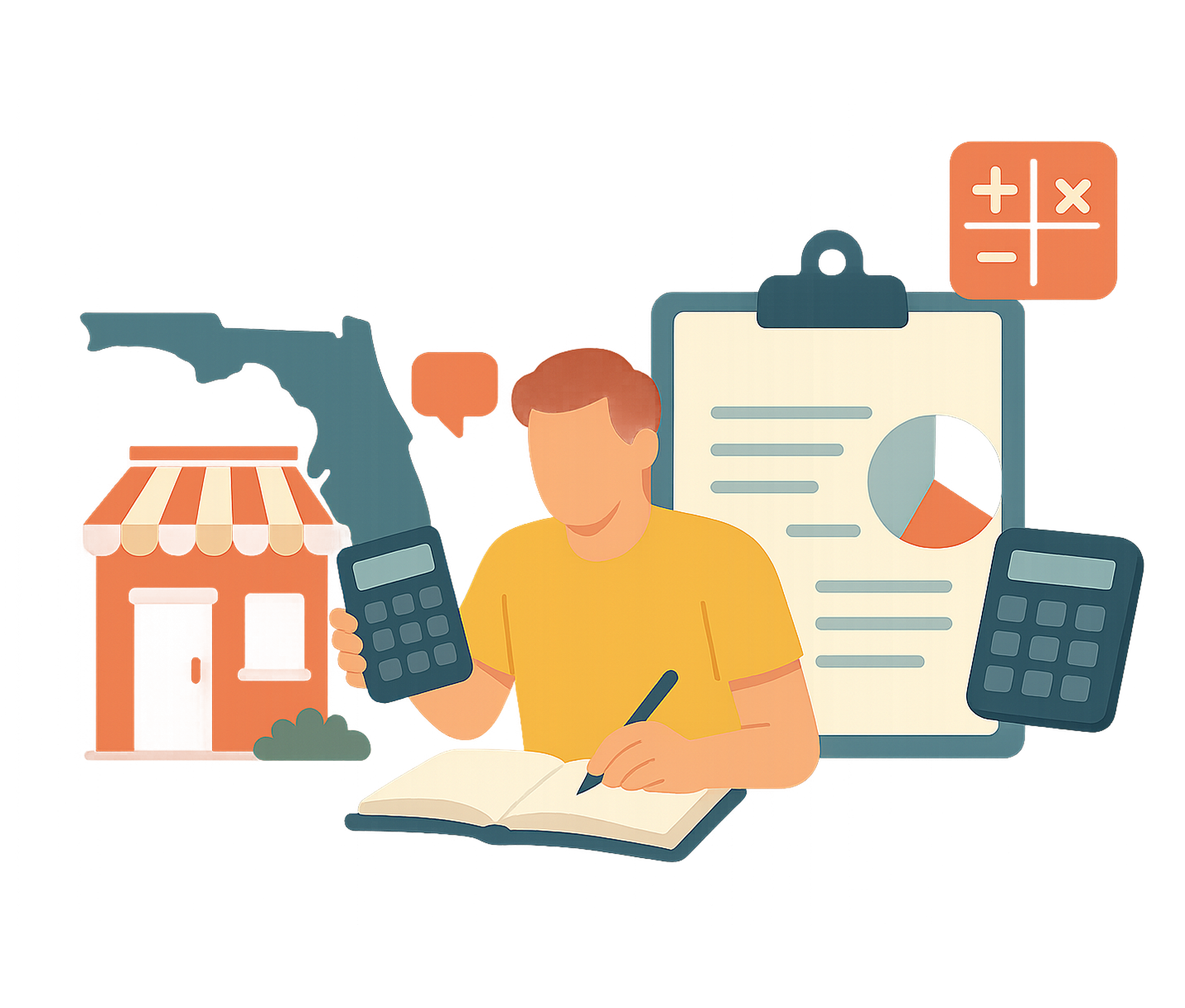
Yes, you can do your own bookkeeping for a small or fine dining restaurant in Florida; you should just follow a structured approach. Many Florida restaurant owners tackle DIY restaurant bookkeeping to save money and stay hands-on with the finances.
The key to this, of course, is being organized, using appropriate tools such as Xero, and maintaining compliance with the ever-changing restaurant accounting requirements in Florida. Thus, here is a simple, step-by-step explanation of bookkeeping for restaurants in Florida, complete with practical steps and some state-specific insights on taxes.
1. Keep Business and Personal Finances Separate
Set up separate business bank accounts and credit cards for your restaurant. Never commingle personal and business transactions. This clear separation makes bookkeeping easier and prevents problems. It simplifies tax time and bookkeeping when you keep separate accounts. It also gives you a clear picture of your restaurant’s cash flow without personal expenses muddying the waters.
2. Choose a Reliable Bookkeeping Software: Xero Recommended
Modern bookkeeping software is essential. Cloud-based tools like Xero make managing restaurant finances easier than ever. With Xero, daily financial tasks—invoicing, bill payments, bank reconciliations, and expense tracking—are streamlined into a user-friendly interface. It allows remote access, integrates with POS systems and restaurant apps, and reduces errors. Set up a chart of accounts tailored to restaurants (e.g., food sales, beverage sales, inventory/COGS, labor, rent).
3. Record All Sales and Expenses Each Day
Keep track of daily transactions. Record sales, purchases, and expenses daily or at least weekly. Ensure POS reports are accurately entered into your books. Separate cash and credit card sales, and record all tips/gratuities. Store all receipts, invoices, and bills digitally. No transaction is too small to record; sloppy records lead to accounting mistakes.
4. Manage Accounts Payable and Receivable
Even small restaurants need systems for paying bills and invoicing customers. Enter vendor bills (e.g., food suppliers, utilities, rent) in your software and track due dates. For catering and events, issue invoices promptly and track payments. Weekly reviews of unpaid bills and invoices maintain cash flow.
5. Handle Payroll and Tips Correctly
If you have employees, payroll bookkeeping is essential. In Florida, you must withhold federal taxes and pay Florida reemployment tax. Use payroll software to automate tasks. Tip reporting is crucial: cash and credit card tips must be recorded and reported. Optional tips belong to employees and are taxable; mandatory service charges are restaurant income and taxable. Withhold the right payroll taxes on tips and pay the employer’s FICA share.
6. Stay on Top of Florida Tax Obligations
Restaurant accounting in Florida includes specific tax responsibilities:
- Register for Florida Sales Tax: 6% state tax plus local surtax. All food/beverage sales are taxable.
- File and Pay on Time: Avoid penalties by marking tax due dates.
- Payroll Taxes: File federal Forms 941 (quarterly) and 940 (annually), and Florida reemployment tax quarterly.
- Income Taxes: Florida has no personal income tax, but C-corps pay corporate income tax. S-corps and LLCs pass profits to the owner’s federal return.
To learn more, see Restaurant Filing Taxes for Both the Business and Owner.
7. Reconcile Accounts Monthly and Review Financial Reports
Reconcile your books to bank and credit card statements monthly. Use software like Xero for easier matching. After reconciling, generate and review:
- Profit & Loss Statement
- Balance Sheet
- Cash Flow Statement
Focus on prime costs (food + labor), profit margins, and expenses as a percentage of sales. Regular reviews help identify trends and guide decisions.
8. Utilize Tax Planning and Take Advantage of Deductions
DIY bookkeeping enables proactive tax planning. Track deductible expenses year-round, such as equipment purchases and vehicle use. Explore credits like:
- FICA tip credit
- Work Opportunity Tax Credit
Some Florida counties have tourist development taxes. Budget large expenses to benefit from Section 179 deductions. Reassess quarterly for tax law changes or estimated payments.
Visit Restaurant Tax Planning for more tips.
9. Know When to Seek Professional Help
DIY bookkeeping is great for small restaurants but know your limits. If you fall behind, make frequent errors, or feel overwhelmed, consider hiring a CPA or bookkeeper. Professionals ensure compliance and provide higher-level insights. Many owners start with DIY and transition to outsourced services as they grow. Accuracy and compliance are key.
Staying Financially Sharp: Your Path to Bookkeeping Confidence
Bookkeeping for your Florida restaurant is achievable with organization and discipline. Follow these steps to manage your restaurant’s finances like a pro. DIY bookkeeping empowers you to understand your business and keep it thriving financially.
Good luck, and happy bookkeeping!